“There is no friend as loyal as a Fiat 500 on a long drive.”
The story of the Fiat 500 began in 1899 when Fiat was founded by Giovanni Agnelli in Turin. In addition to automobile manufacturing, the forward-thinking company soon expanded its production to include commercial vehicles and aircraft.
As early as 1919, the Fiat Type 501 Balilla appeared in huge numbers for the time. The first small car to cause a sensation was the Fiat 500 A, known as the “Topolino”, which was produced from 1936. Even Walt Disney liked the Topolino, namely as “Mickey Mouse’s car”.
The Topolino was followed by the B model and finally, in 1949, the C model with a modernized body but still with the same technology.
The Fiat 500 Nuova was a completely new model that was smaller than its predecessor but offered space for four people. It was this model that launched the small Italian’s success story.
With the introduction of the Fiat 500 N in May 1957, a new era began in the company’s small car history. This model was particularly suited as a city car and, with its compact size and low fuel consumption, was also very popular among women.
It gained both a technical and spatial advantage with its rear-mounted engine, although some contemporaries considered its 13 horsepower too weak. For ambitious drivers, a sport version with a closed roof and a proud output of 21.5 horsepower was soon introduced. Additionally, Austrian car enthusiasts were offered a fine vehicle with the Steyr-Puch, initially produced in Graz with 19 horsepower.


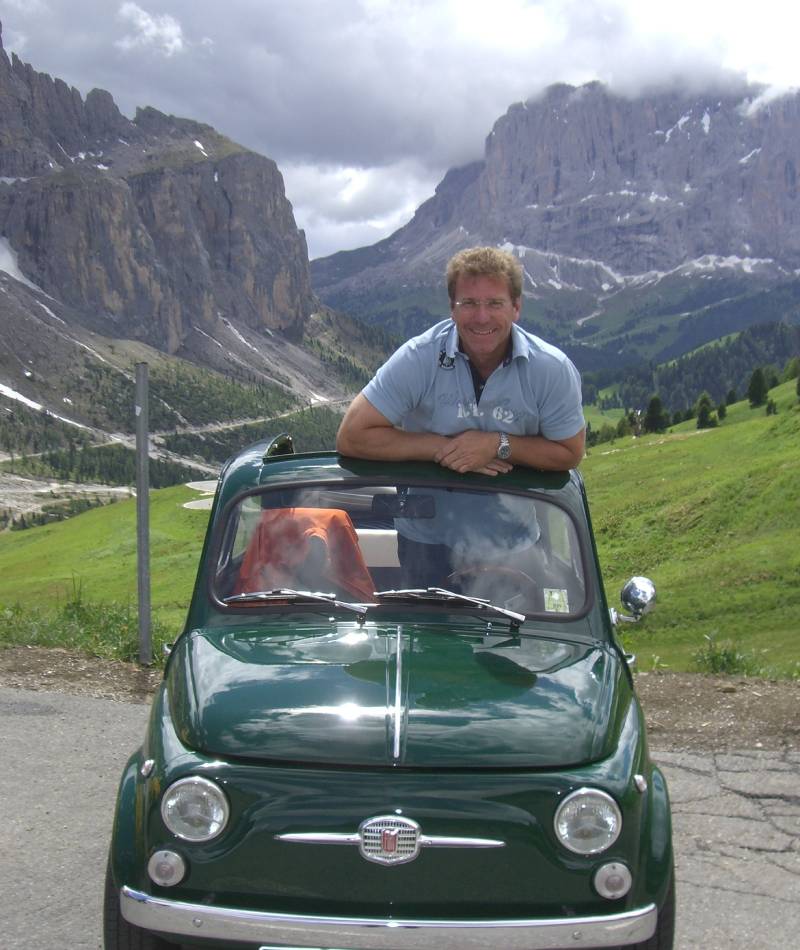
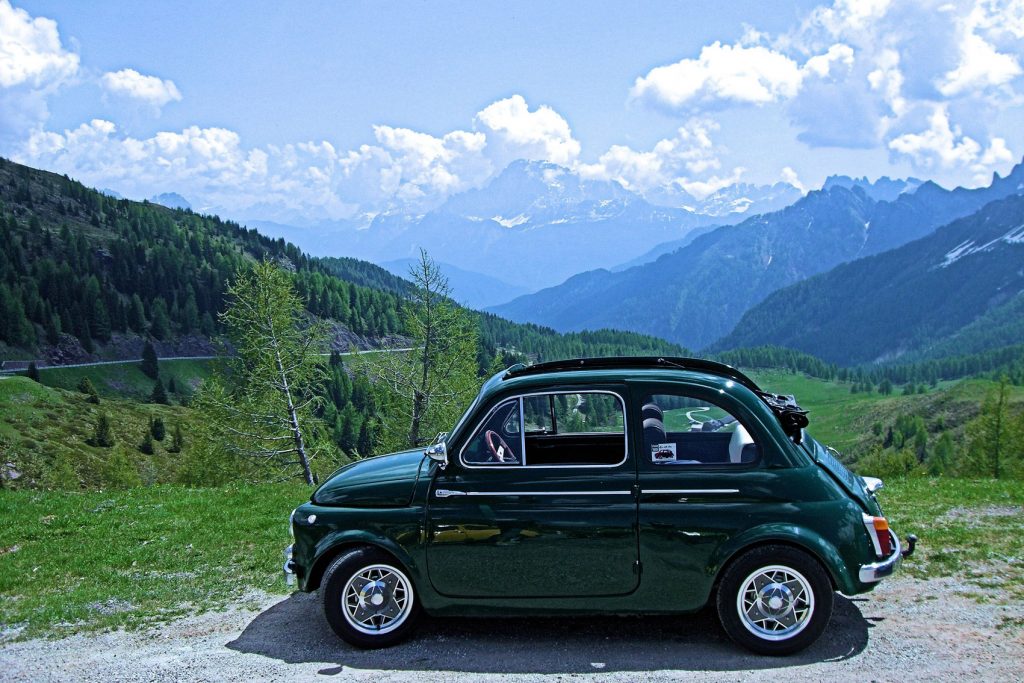
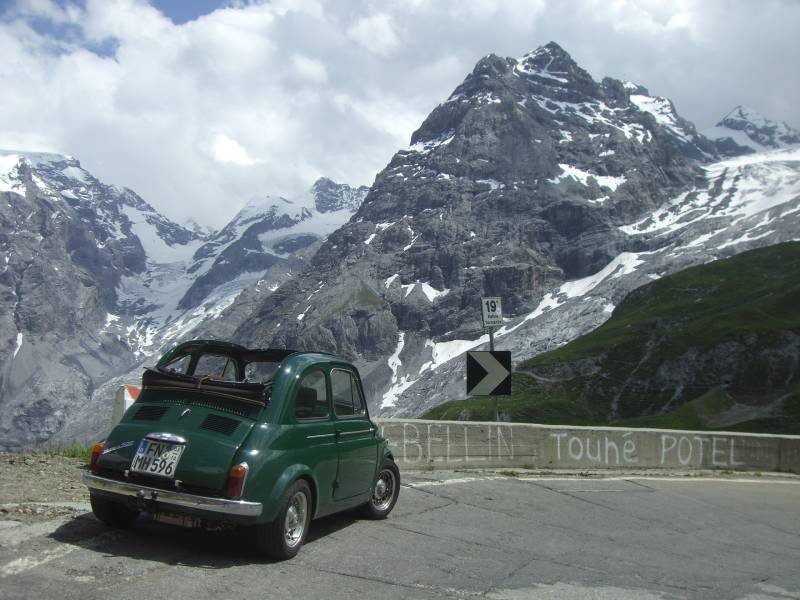
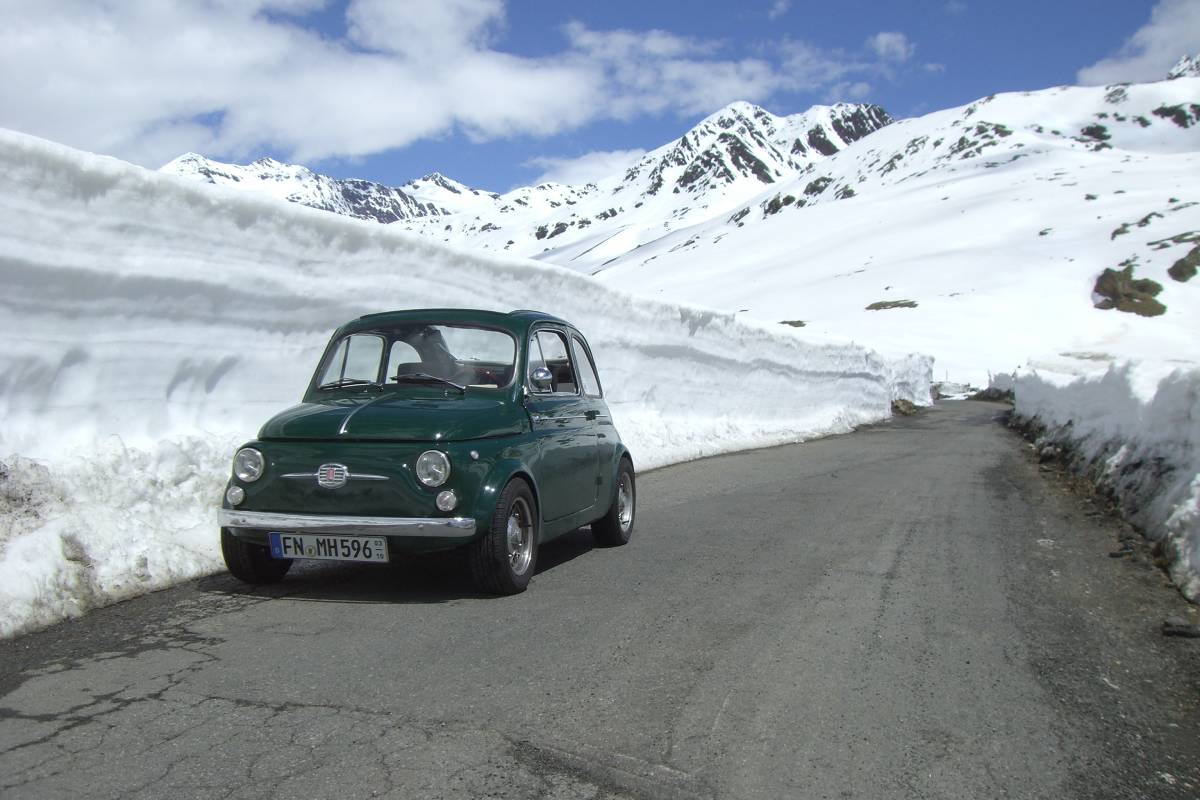
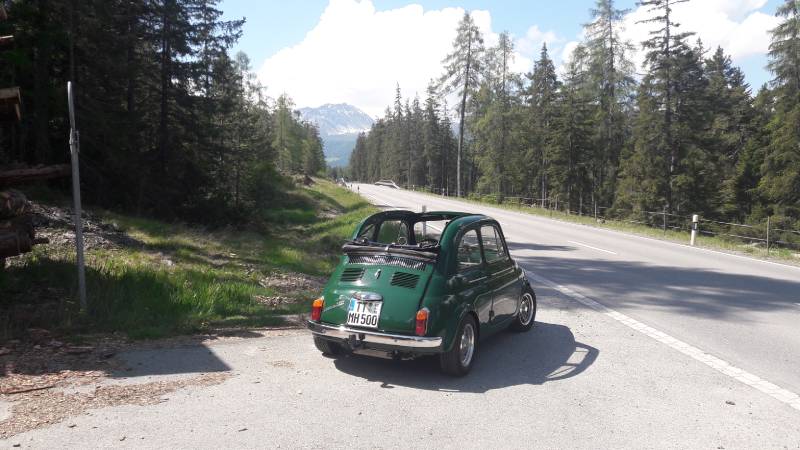
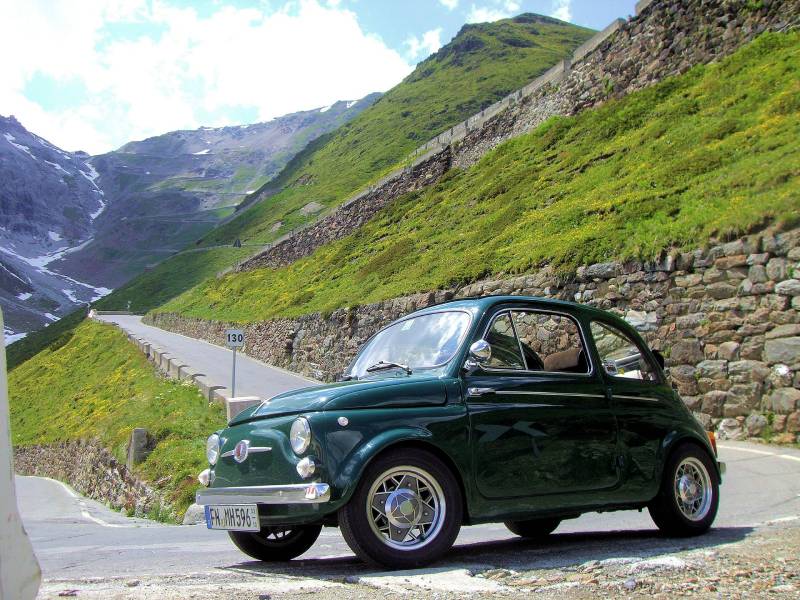
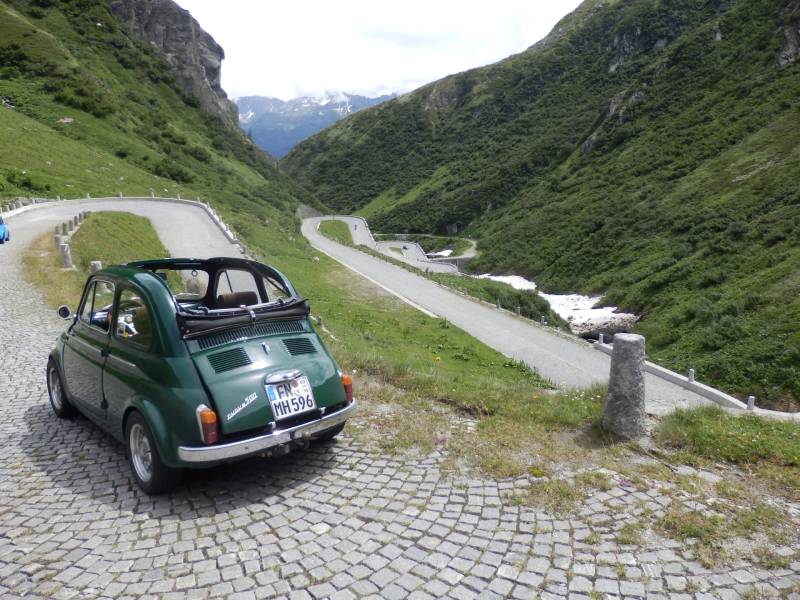
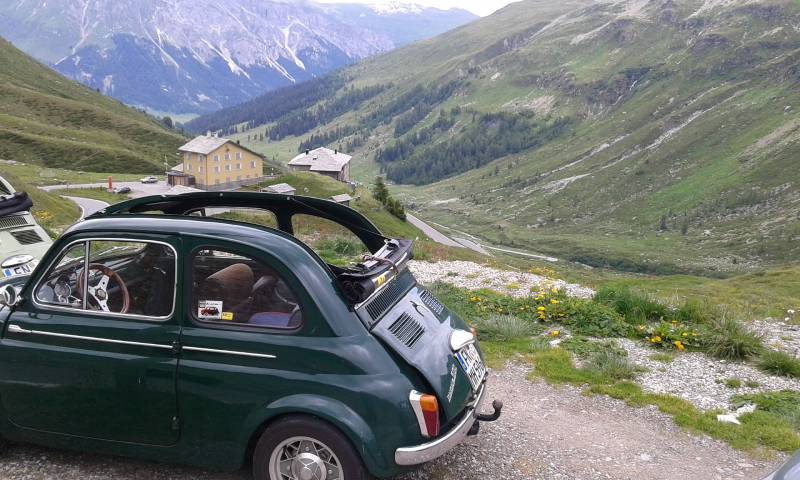
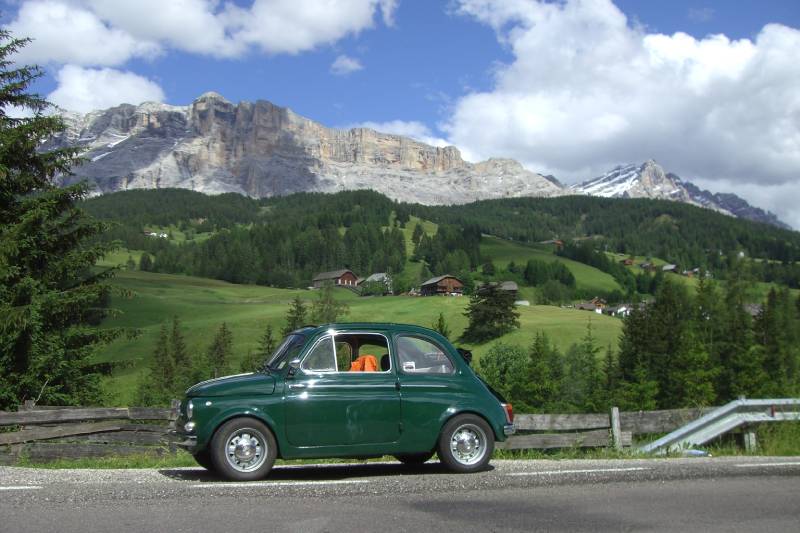
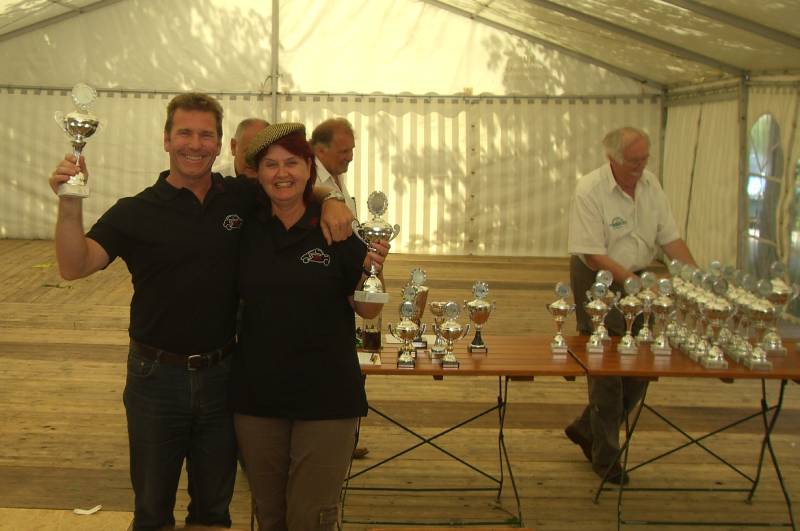
Markus Hänsler is a passionate Fiat 500 driver. He has taken his photos in the Dolomites, on the Splügen Pass, the Gotthard Pass, and the Stelvio Pass. He regularly participates in the Axel Gerstl’s photo competitions with his pictures, as well as in regularity orientation drives and club rallies (e.g., Fiat Club Italia).
It had only been thirteen years since the production of the Fiat 500 was discontinued when, in 1988, about 600 kilometers from Fiat’s headquarters in Turin, the company of Axel Gerstl was founded in a small garage near Munich. At that time, the car was still considered a “youngtimer,” and spare parts were scarce. Many owners had to rely on leftover stock from old inventories or used parts to keep their “little Italian” running—and therefore alive. Others had to use modified parts from its successor model, the Fiat 126, and improvise in maintenance.
During this time, Axel Gerstl — already an enthusiastic Fiat 500 driver and mechanic since 1982 — turned a garage into a small spare parts warehouse alongside his training. Initially, it offered limited space and housed used parts as well as the first new components.
As a result, the spare parts warehouse steadily grew until the garage was no longer sufficient. In 1994, a former farm in Biburg, just a few kilometers away, was rented, which remains the company’s headquarters to this day.
A lot has happened since then: The company has grown from a one-man business into a company that now employs more than 20 people. After initially sending out catalogs and selling over the phone, the company turned to the Internet and a functioning online store in 2000. And in addition to the spare parts warehouse in the former farmhouse, further storage space and office premises were gradually added, now covering an area of over 1,000 m².
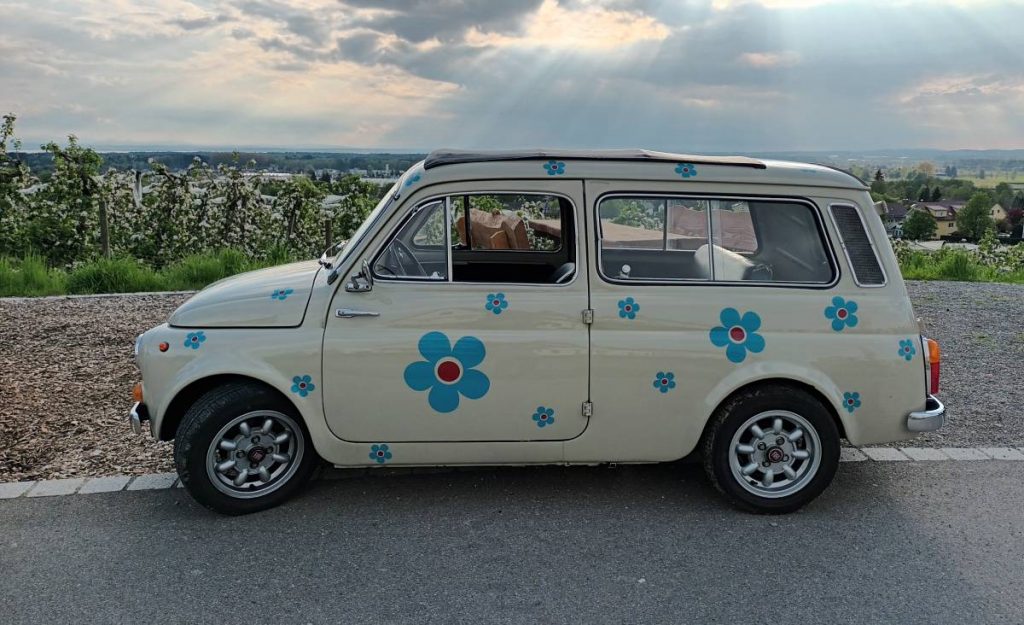
Of course, the family was not to be left out and so the model range was extended to include an estate, the Fiat 500 D-Giardiniera. With its underfloor engine, it offered enough space for more than hand luggage. Most of these models, however, were soon worn out as the workhorses of small businesses. The D-Giardiniera was later followed by the F-Giardiniera with improved performance features. From 1972, Autobianchi continued to produce the estate under license until 1977.
The direct successor to the Nuova was the Fiat 500 D, which was produced from 1960 to 1965. The D model had a shorter sunroof and larger rear lights, finally had crank windows and, with its standard 17.5 hp, already reached a speed of almost 100 km/h. These improvements boosted sales figures, so that by 1965 an impressive 640,000 units of this model had been produced.
The Fiat 500 F, which no longer had “suicide doors”, appeared in the same year. Technically mature and at a whopping 2.97 meters long, this Fiat had all the advantages of a small car. With its larger windshield and significantly improved seats, it was also more comfortable. This best-known variant of the Fiat 500 is probably the most popular of its kind, which may also be due to the fact that the luxury version of the F model, namely the Fiat 500 L (Lusso) with more chrome and slightly more upmarket equipment, was launched at the same time from 1968. By the time production of the Fiat 500 F ended in 1972, a total of 2.2 million of these two models had been sold, meaning that we can still enjoy many of them today.
Fiat produced the Fiat 500 R from 1972 as the last model in the 500 classic car series. This model was characterized by a 594 cc engine with a whopping 23 hp. Despite the more modern technology borrowed from the Fiat 126, which was already being sold at the same time, sales were rather sluggish. Not least the French competitors Renault 4 and the 2 CV from Citroen, but also the Fiat 126 itself, ensured that production of the R-series, which had only started three years earlier, was discontinued on August 1, 1975. This marked the end of the long, very successful era of the Fiat 500, which we always look back on with pleasure.
Fiat 500 126A5, series “R ”Maximum output 18 hp at 4000 rpm or 23 hp (depending on the carburetor used)
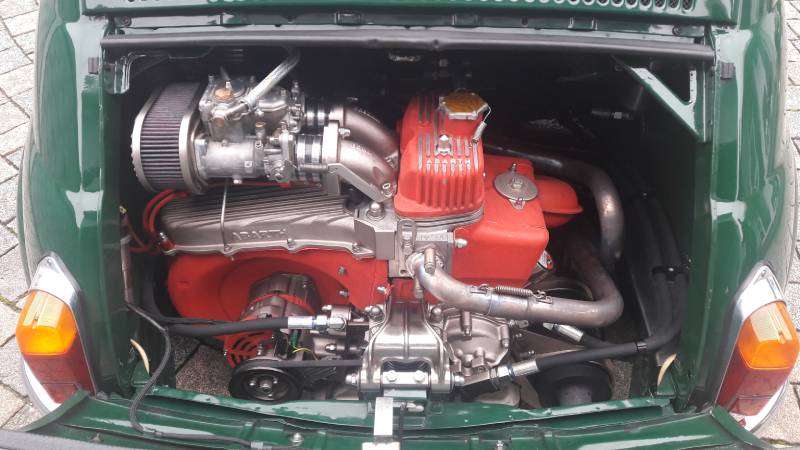
A Weber 24 IMB carburetor was used as standard for the “R” series, which throttled the engine output to 18 hp.
For the Fiat 126 (with the same engine), on the other hand, a Weber 28 IMB was used and the engine output thus reached 23 hp.
In practice, Fiat 500 R drivers often used the more powerful carburetor of the Fiat 126.
Nowadays, only a few Fiat 500 R models are likely still equipped with a 24 IMB.
2-cylinder
approx. 100 km/h
594 ccm
Fiat 500 R (built from 1973): 168,426 units
The last Fiat 500 of the “R” series rolled off the production line in 1975.
Thus, 2025 also marks the 50th anniversary of the end of production of the Fiat classic car.